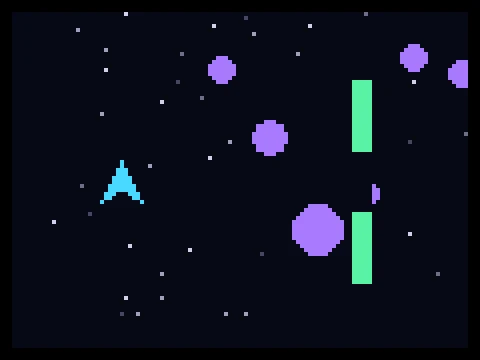
Starship Sprint
Steer a small starship through a scrolling hazard field of meteors, gates and energy barriers.
Arrow keys or WASD
Destroy each enemy formation before it reaches your line, using shield cover and formation-clear bonuses.
Pixel Invaders shares a genre with a very famous game and deliberately shares almost nothing else. Where the classic template used a rectangular block descending in fixed steps, this game uses shaped formations — wedges, rings, spirals, columns, diamonds — that rotate as a body and drift on independent vectors. Reading the shape as it spawns, and understanding what threat pattern that shape produces, is the actual skill.
Each shape punishes a different position. A wedge concentrates fire at its apex, so you want to attack from the flank. A ring has no safe angle but a hollow centre, which is a genuinely viable place to be if you can get there. A spiral unwinds toward you, which means the safe position changes continuously. Five shapes cycle in a rotation that scrambles as waves progress, so you cannot simply memorise a sequence.
You have three shield blocks that absorb enemy fire and degrade visibly as they take hits. They do not regenerate. This creates the game's resource decision: shields are consumable cover, and spending them early on waves you could have out-manoeuvred means having none left when the formations get dense.
Destroy each enemy formation before it reaches your line, using shield cover and formation-clear bonuses.
| Input | Action |
|---|---|
| Left / Right arrows or A / D | Move |
| Space or Up arrow | Fire |
| P or Escape | Pause and resume |
| R | Restart |
| Touch left / right buttons | Move (mobile) |
| Touch Fire button | Fire (mobile) |
Every game on this site can be paused with P or Esc and restarted with R. Sound, retro screen effects and fullscreen are toggled from the buttons above the play area.
Each formation is a rigid body of enemies that rotates around its own centre while translating downward. Rotation means an enemy's firing angle changes over time, so a position that is safe when a formation spawns may not be safe five seconds later.
Three shield blocks sit between you and the formations. Each absorbs several hits, chipping away visibly. They never regenerate within a run. Using them as permanent cover is the most common beginner error.
Destroying every enemy in a formation before the next one spawns awards a substantial bonus and resets your fire rate to its fastest tier. Missing one straggler forfeits both, which makes sweeping a formation cleanly worth far more than the individual kills.
| Action | Value |
|---|---|
| Enemy destroyed | 80 points |
| Formation cleared completely | 1,000 points x wave number |
| Formation cleared before it descends past halfway | 500 point bonus |
| Combo multiplier | Up to x8 for consecutive kills |
Your best result is saved in this browser only. Nothing is uploaded, and there is no global leaderboard — see the storage policy for exactly what is kept.
No. It shares the formation-shooter genre, which is not any one game's property, but the formations, movement, enemy designs, shield behaviour, scoring and power progression are all original. No sprites, sounds or level data from any commercial game are used.
No. Three shield blocks per run, degrading permanently. Managing them is a core part of the game.
Five — wedge, ring, spiral, columns and diamond — cycling in an order that scrambles as waves progress.
1,000 points multiplied by the wave number, plus a fire-rate reset. By wave 10 it is worth more than all the individual kills in that formation combined.
Chosen by shared category, tags and difficulty — not padded with unrelated titles.
Steer a small starship through a scrolling hazard field of meteors, gates and energy barriers.
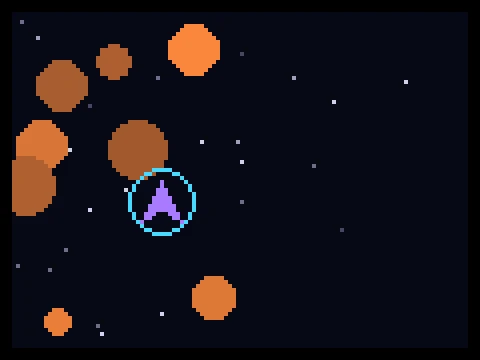
Survive an endless meteor field using momentum-based flight and a cooldown dash.
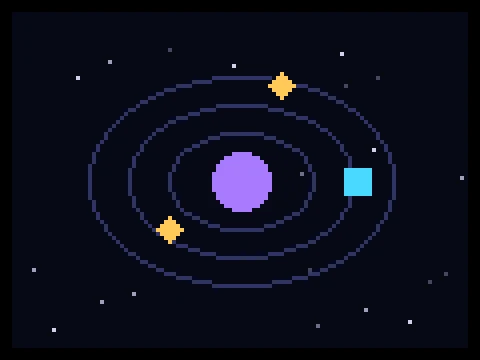
Hold to pull your craft into a tighter orbit, release to let it drift wider — collect energy and dodge debris.

A one-button tunnel flight where holding thrusts upward and releasing lets gravity pull you down.
How coin-operated cabinets shaped a design philosophy, why it declined, and how the browser revived it.
Momentum flight, leading shots, formation reading, dash economy and orbital control.
What defines an arcade game, how the six main families differ, and how to get better at all of them.