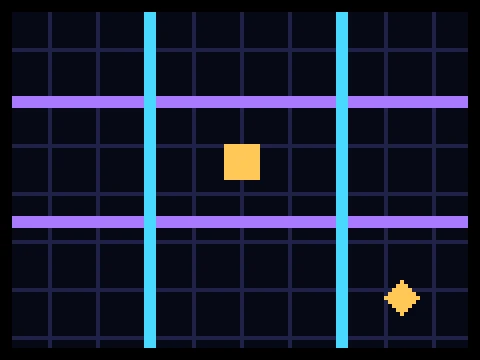
Laser Grid
Move through a grid of sweeping laser barriers, collecting data nodes between the gaps.
Arrow keys or WASD
Arcade puzzle games are not quiet puzzle games. There is always a clock, and the clock is the point: the challenge is not whether you can find the answer but whether you can find it fast enough, repeatedly, while the pressure rises. The six games in this category cover the main flavours — spatial routing, reaction speed, timing windows, physics control and pattern reading.
6 playable games in this category. Every one is complete — there are no placeholders.
Move through a grid of sweeping laser barriers, collecting data nodes between the gaps.
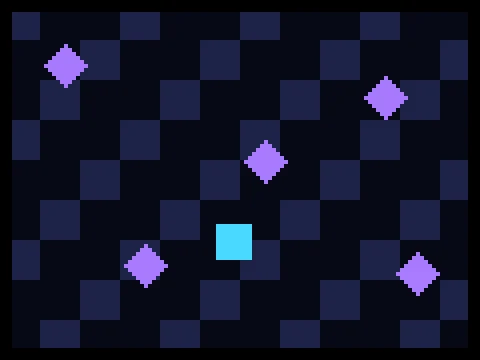
Route through a generated maze and collect every crystal before the countdown runs out.

A brick-breaking game with six original layouts, armoured bricks and five power-ups.
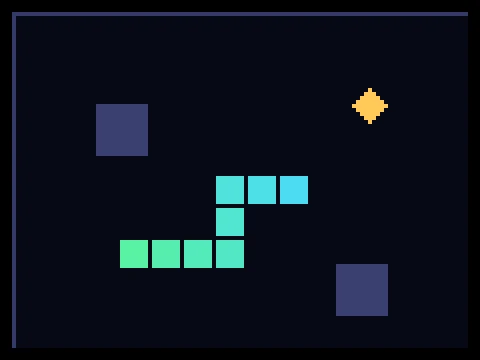
A growing-trail arena game with obstacles, wrap portals, speed tiers and combo scoring.

Find keys, open gates and reach the exit before the timer expires — while patrolling hunters roam the maze.

Hit targets as fast as you can while the game measures your reaction time, accuracy and combo.
Raw reaction time — the neurological floor, around 200 milliseconds for a simple visual stimulus — barely moves with practice. What does improve, dramatically, is anticipation: recognising a pattern early enough that you are responding to a cue rather than to the event itself. Neon Reflex measures the first; every other game in this category rewards the second.
Crystal Collector and Pixel Maze are routing problems with a timer attached. The instinct is to move immediately and solve as you go, but the fastest runs almost always begin with a two-second pause to plan the first third of the route. Moving without a plan means backtracking, and backtracking is the only thing in these games that genuinely costs you the run.
Route planning under a clock, reading periodic hazards, and physics control.
Reaction time versus anticipation — what actually improves with practice, and how to train it.
Most of them are. Crystal Collector and Pixel Maze run against a countdown, Neon Reflex measures your reaction time directly, and Laser Grid pressures you with moving hazards rather than a clock. Arcade Breaker is the exception — it is level-based with no timer.
They will improve your performance at these specific tasks, and pattern recognition transfers reasonably well between similar games. Broader claims about improving general cognition are not something this site will make — the evidence for them is contested and we are not in a position to evaluate it.
It shares the growing-tail premise, which is a genre convention rather than any one game's property, but it adds arena obstacles, wrap portals, speed tiers and a combo system that changes how the game is actually played.
Neon Reflex. It has one instruction — hit the target — and it gives you a clear, improvable number at the end of every round.
Fast, reflex-driven arcade games built around short levels, rising pressure and a score you want to beat.
7 gamesOriginal space shooters, meteor fields, tunnel flights and orbital challenges set against scrolling starfields.
5 gamesJumping, timing and precise movement — endless runners, tower climbs, collectible hunts and physics platformers.
5 gamesTop-down time trials, endless traffic runs and drift-scoring challenges built for short, repeatable sessions.
3 gamesEndless waves, base protection and threat prioritisation — how long can you hold out as the pressure compounds?
4 games