
Arcade Breaker
A brick-breaking game with six original layouts, armoured bricks and five power-ups.
Mouse, arrows or touch drag
Hit every target before it expires. Score is driven by speed, accuracy and combo length.
Neon Reflex is the most measurable game on the site. Targets appear for a limited window; you hit them or you do not; and at the end of a round you get three numbers — average reaction time in milliseconds, accuracy as a percentage, and longest combo. Those numbers move with practice in a way that a score alone does not, which makes this the game where improvement is easiest to see.
The design intent is to separate two things people usually conflate. Raw reaction time — how long it takes you to respond to something genuinely unpredictable — barely improves with practice. What improves is anticipation: recognising a pattern early enough that you are already moving before the stimulus completes. The game measures both by mixing purely random target placement with sequences that follow a spatial pattern, and the gap between your performance on the two tells you which skill you are actually using.
Three target types keep it from becoming a pure clicking test. Standard targets are worth base points. Decoys look similar but cost you points and break your combo if hit — they are there to punish indiscriminate clicking. Chain targets appear in linked groups and must be hit in order for the full bonus, which is a working-memory task layered on top of the reflex one.
Hit every target before it expires. Score is driven by speed, accuracy and combo length.
| Input | Action |
|---|---|
| Mouse click | Hit a target |
| Touch tap | Hit a target (mobile) |
| P or Escape | Pause and resume |
| R | Restart |
Every game on this site can be paused with P or Esc and restarted with R. Sound, retro screen effects and fullscreen are toggled from the buttons above the play area.
Every target has a visible shrinking ring showing its remaining lifetime, starting at 1.4 seconds and reducing as the round progresses. Missing a target — letting it expire — breaks your combo, so the pressure is to hit everything, not to hit selectively.
Decoys are visually distinct but similar enough to require a real check. Hitting one costs points and breaks the combo. This is what stops the optimal strategy from being to click everything as fast as possible.
Groups of three to five targets appear connected by a faint line and must be hit in sequence. Out-of-order hits score as normal targets and forfeit the chain bonus, which is substantial.
| Action | Value |
|---|---|
| Standard target hit | 100 points x combo multiplier |
| Speed bonus | Up to 150 extra points for a fast hit |
| Chain completed in order | 600 point bonus |
| Decoy hit | -200 points and combo broken |
| Target expired | Combo broken |
Your best result is saved in this browser only. Nothing is uploaded, and there is no global leaderboard — see the storage policy for exactly what is kept.
For a simple visual stimulus, most people land somewhere between 250 and 350 milliseconds, and the neurological floor is around 200. If you are seeing numbers well under 250 consistently, you are anticipating patterns rather than reacting.
It will improve your performance at this task, and pattern anticipation transfers reasonably to similar games. This site will not make broader claims about general cognitive improvement — the evidence for those is contested.
Sixty seconds. The target lifetime shortens through the round, so the last twenty seconds are considerably harder than the first.
Decoys use a different shape and a distinctly different colour. They are designed to require a genuine check rather than to be indistinguishable.
Chosen by shared category, tags and difficulty — not padded with unrelated titles.
A brick-breaking game with six original layouts, armoured bricks and five power-ups.
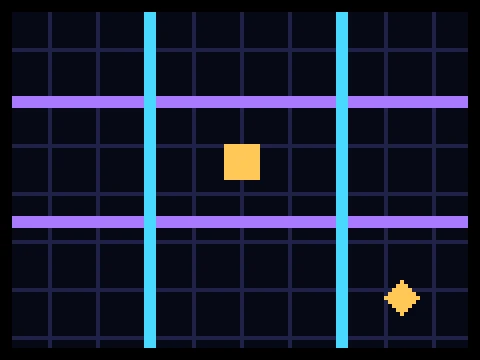
Move through a grid of sweeping laser barriers, collecting data nodes between the gaps.
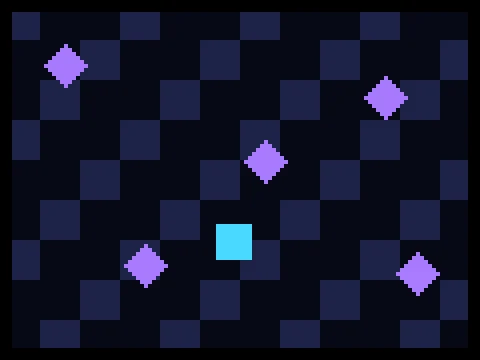
Route through a generated maze and collect every crystal before the countdown runs out.
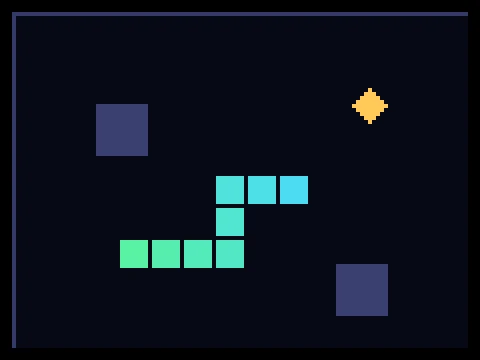
A growing-trail arena game with obstacles, wrap portals, speed tiers and combo scoring.
Session length, feedback clarity and skill expression — the structural reasons the format endures.
The one-more-run loop, near-miss psychology, self-attributed failure — and keeping it healthy.
Reaction time versus anticipation — what actually improves with practice, and how to train it.