
Pixel Defense
Defend a base from escalating waves, choosing one upgrade between each wave.
Mouse or touch
Keep as many of your six cities alive as long as possible by intercepting the threats that matter most.
Retro Defender is the purest expression of the idea that survival games are about triage. You have six cities along the bottom of the screen and a single interceptor you aim with the pointer. Objects fall toward the cities from above. Your interception rate is fixed. The incoming rate is not. Within a minute you are structurally unable to stop everything, and the entire game becomes a sequence of decisions about what you are willing to lose.
The scoring makes those decisions concrete rather than abstract. Cities are worth points while they are alive — a continuous trickle that scales with how many you still have. Losing a city does not end the run, it reduces your income. So the question is never simply 'can I save this?' but 'is saving this worth what it costs me elsewhere?'
Three threat types create genuinely different triage problems. Standard objects fall straight and slowly. Splitters break into three at a set altitude, so intercepting them above that point is worth three interceptions and below it is worth one. Fast movers arrive in under two seconds and cannot be reacted to — they must be anticipated from their launch flash. Reading which is which, immediately, is the skill.
Keep as many of your six cities alive as long as possible by intercepting the threats that matter most.
| Input | Action |
|---|---|
| Mouse move or touch drag | Aim the interceptor |
| Left mouse button or tap | Launch an interceptor |
| P or Escape | Pause and resume |
| R | Restart |
Every game on this site can be paused with P or Esc and restarted with R. Sound, retro screen effects and fullscreen are toggled from the buttons above the play area.
Your interceptor takes time to travel and detonates in a radius. Leading the shot and choosing the detonation altitude both matter — a well-placed detonation can clear several objects at once, which is the only way to keep pace past the first minute.
Splitters divide into three at a fixed altitude marked by a faint line across the screen. Intercepting above the line stops all three; below it, you have three separate problems. This single rule generates most of the game's prioritisation decisions.
Each surviving city generates points continuously. Losing one permanently reduces your scoring rate, which means early losses compound. Defending aggressively at the start is worth more than it appears.
| Action | Value |
|---|---|
| Threat intercepted | 120 points |
| Multi-intercept (2+ in one detonation) | 200 point bonus per extra threat |
| Splitter stopped above the split line | 400 points |
| City income | 15 points per second per surviving city |
| Wave survived with all cities intact | 1,500 point bonus |
Your best result is saved in this browser only. Nothing is uploaded, and there is no global leaderboard — see the storage policy for exactly what is kept.
For the first few waves, yes. After that the incoming rate structurally exceeds your interception rate. The game is about which losses you choose, not about avoiding them.
The split altitude. Splitters divide into three when they cross it, so intercepting above it is worth three times as much.
Yes. Your score income also drops with each city lost, so the ending accelerates.
Because it requires prioritising under time pressure, and the correct priority is frequently the counter-intuitive one — the distant splitter rather than the nearby object.
Chosen by shared category, tags and difficulty — not padded with unrelated titles.
Defend a base from escalating waves, choosing one upgrade between each wave.
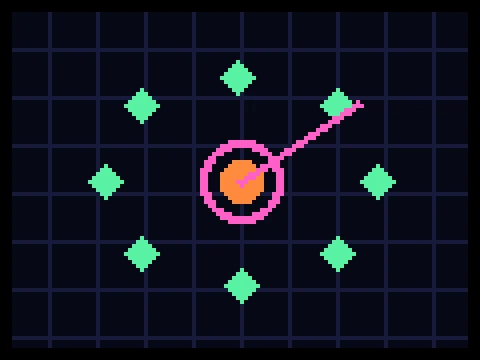
Rotate a cannon around a central core and hold back waves of converging enemies.

An endless arena survival game where enemies never stop arriving and never despawn.
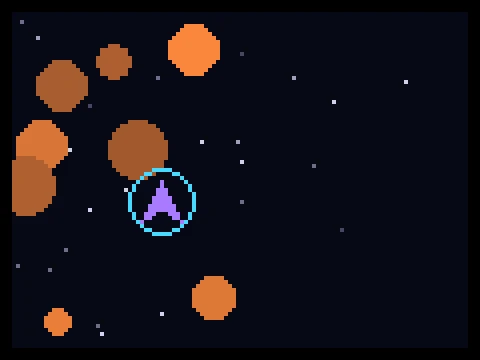
Survive an endless meteor field using momentum-based flight and a cooldown dash.
Threat triage, rate management, upgrade ordering, cluster control and wave gaps.
What defines an arcade game, how the six main families differ, and how to get better at all of them.
A clear definition of the genre: origins, defining characteristics, and how browser games continue it.